Monday, May 27, 2019

The Woodpecker that Doesn't (peck wood)

How about a woodpecker that doesn't really like to peck wood? And instead of drilling into tree trunks looking for grubs it prefers to feed on flying insects?  Well, we have such a bird in our Northeast Washington neighborhood.

During the Lewis and Clark expedition of 1804-1806 the Corps of Discovery encountered and cataloged hundreds of animal and plant species never before seen by European naturalists. Native Americans had already seen, named, and understood these species for centuries. The leader of of the expedition, Meriwether Lewis, had received training in natural history prior to departure. He documented each new species they encountered and many specimens were brought back with them on their return. Naturalists began cataloging and giving their own names to these "new" species.

One of the new species was a bird of the northern Rockies that was obviously a woodpecker. It was named the Lewis's Woodpecker. It is easily identified by its dark, oily green back, rosy pink belly and gray collar.
Lewis's Woodpecker on Bisbee Mtn., May 25, 2019

Lewis's woodpecker is a little different in that it generally does not excavate it's own cavity in trees. It prefers, instead, to use holes already excavated by other woodpeckers, or natural cavities in older, decaying trees. The Lewis's woodpecker will use its substantial beak to tidy up and fine tune the cavity to its liking.

Another unusual behavior for a woodpecker is its preference for catching flying insects instead of finding grubs under bark and in decaying wood. It can be observed flying out from a perch, perform aerial acrobatics to catch flying insect prey, and returning to its perch. This is very much like the various Flycatchers and Bluebirds we can see in our area.

A third distinctive is the way it often perches. In the photo above you can see the Lewis's Woodpecker perched perpendicular to the tree branch - not clinging vertically to a tree trunk. Lewis's woodpeckers can and do climb tree trunks vertically like other woodpeckers. But unlike its cousins, it can generally be seen perched on top of a branch, snag or utility pole.

Flying Lewis's Woodpecker. Photo courtesy Cornell Lab of Ornithology

Keep an eye out for Lewis's Woodpeckers in  open pine forests and also in aspen and cottonwoods near streams.

Good Birding,

      - Hawkeye

Monday, May 20, 2019

Bobolinks...Yeah, They're a Real thing


Bobolink. Yes, there is such bird and it lives and breeds in the broad valley floors of the Colville and Pend Oreille Rivers. The Bobolink winters far away in South America and returns to North America to breed. The round trip can be as long as 12,500 miles!! One of the longest migrations of any song bird on the planet. During its lifespan it will have flown far enough to circle the globe 4-5 times.
                       
Bobolink Breeding male
 Male Bobolink. Photo courtesy the Macauley Library, Cornell Lab of Ornithology

The Bobolink is a member of the Icteridae family which includes all of the blackbirds, orioles and meadowlarks. They specialize eating weed seeds, insect larvae, adult insects, spiders and other arachnids.

In Northeast Washington they can be found in the valley floors of the Colville River and Pend Oreille River. It seems to favor large fields of grass, including natural areas, hay fields, and pastures. They prefer to place their nest on moist ground at the base of large non-woody plants (think of the wet meadows in our river valleys). I myself have seem them north of Deep Lake in the Leadpoint area and south of Chewelah along Newton Lane.

Bobolink  sightings as reported in eBird,. Courtesy of the Cornell Lab of Ornithology.


Bobolink songs and calls are very unique and probably the best way to locate this grassland bird. Officially described as a "metallic, bubbly, rambling song with a mixture of sharp, high notes and buzzy low pitches," I think of a Yellow-headed Blackbird that has swallowed a Song Sparrow.

Many birds have songs and calls that are almost other worldly. Locally we have some real masters of  the bizarre sound. You may have thought you heard running, bubbling water, only to find out it was a a raucous flock of Brown-headed Cowbirds calling.
Brown-headed Cowbird Adult male
Photo Courtesy of the Macauley Library, Cornell Lab of Ornithology

Listen to their Flock Calls here:
Brown-headed Cowbirds sounds

Many years ago while working in the woods on the backside of Dominion Mt. I  found myself temporarily disoriented (not lost, mind you) in dense timber and thick fog. That's when the hair on the back of my neck stood straight up. A sound from the Twilight Zone surrounded me and seemed to follow me. The effect was a cross between a pebble being drooped into a deep well and an alien spacecraft that seemed to hover over head, out of sight, but clearly with its eyes on me. At a loss for a rational explanation I resigned myself to whatever fate awaited me. That's when a Common Raven appeared between the tree tops, repeating the it's 'Never More" call to my embarrassed enlightenment.
Common Raven Juvenile
Photo Courtesy the Macauley Library, Cornell Lab of Ornithology

Beside there familiar croak and caw, listen to some of the other sounds a Common raven might make. It is not even close to a complete list. I personally believe they make it up as they go. Scary-smart birds.

Common Raven Calls


So keep you ears open. You might just have the hair on the back of your neck rise in surprised amazement. Let us know if you find a Bobolink this summer.


Good Birding,

       - Hawkeye

Saturday, May 11, 2019

Is it a sparrow, or a finch, or...?


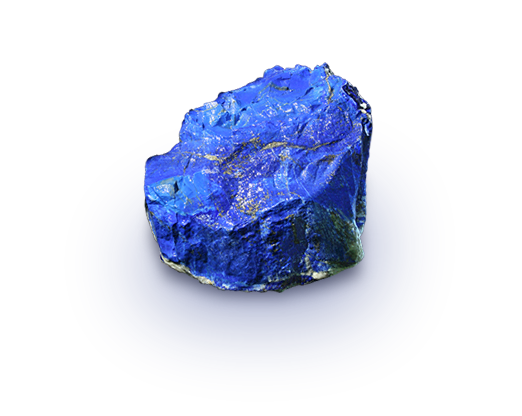
One of the most strikingly beautiful passerines (the perching birds) in Northeast Washington is the Lazuli Bunting. Named after the beautiful gemstone lapis lazuli, the bright blue songbird graces our shrub patches each spring and summer. Pronounced "LAZZ-you-lee", this bird appears to be part sparrow, part finch, part cardinal. Ornithologists have categorized it in various ways over the years. The American Ornithological Society currently has it in the Cardinalidae (Cardinal) family, along with our local  Western Tanager and Black-headed Grosbeak.

The Lazuli Bunting has a beak suited for feeding on insects, caterpillars, and spiders, as well as the berries and seeds of serviceberry and chokecherry - which we have plenty of!

          Male Lazuli Bunting. Photo courtesy the Macaulay Library of the Cornell Lab of Ornithology

Listen to the Lazuli Bunting's song by following this link; Lazuli Bunting singing


Responsive image
Lapis Lazuli, uncut and un-polished


Look for this gem of a bird on brushy hillsides near water (especially streams). The males can often be seen perched on the top most branches and apparently like showing off their colors. The bulk of our Lazuli Buntings winter on the pacific coast of Mexico. Their annual migration brings them across the desert Southwest of the U.S.and the mountainous sagebrush of the Great Basin.
Range Map for Lazuli Bunting


Keep a sharp eye and ear out for this amazingly beautiful bird. It will lift your day!

Good Birding,

      - Hawkeye


Friday, April 26, 2019

Happy Birthday Jean-Jacques Audubon...wait, who?

You know him as John James Audubon, early American naturalist and painter. Audubon was born on this day, April 26, 1785. Born in what is now known as Haiti, to a French sea captain and plantation owner, his given name was Jean-Jacques. Young Jean-Jacques spent his youth in Pennsylvania and then France. Fearing for his son, and not wanting him to be drafted into the French Army as part of the Napoleonic Wars, Jean's father sent him back to America where he changed his name to the English version, John James Audubon.

We know John James Audubon from his classic collection of prints of North American birds in the book, The Birds of America. Young Audubon made a living as a partner in a general store and also by hunting and selling animal skins. He was finally led to pursue two life long passions: birds and painting. It is reported that every bird Audubon painted, he shot . But this paradox was not lost on him. "The moment a bird was dead," he said, "no matter how beautiful it had been in life, the pleasure of possession became blunted for me."

John James Audubon 1826.jpg
Young John James Audubon. Portrait by john Syme, 1826

Audubon's study was a serious one. He is credited with being the first to band a bird to study its habits. By tying a colored yarn to the leg of an Eastern Phoebe he learned that the bird returned to the same nesting site year after year. 

His goal was to paint every bird in America that he could. His travels took him to the Florida Keys, the east coast and mid west of the young nation that was his adopted home. He took his paintings to Europe where he sold subscriptions to finance the printing of his works into large, expensive books that were purchased by wealthy patrons, eager to view the best images of North American birds.

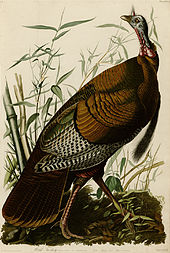
Plate 1 of The Birds of America by Audubon, depicting a Wild Turkey


Ill health plagued Audubon much of his life and finally brought him to a depleted condition and eventual death in 1851. He is buried in Manhattan, New York City, New York. His fame has resulted in numerous parks and schools being named after him, as well as the well known Audubon Society. 

John James Audubon
Audubon in later years. Portrait by  George P. A. Healy; Museum of Science, Boston

Joyeux Anniversaire, Jean-Jacques!

Locally, we  are always reminded of this icon natural history when we see the familiar and abundant  Audubon's Yellow-Rumped Warbler.  Be on the look out for these friendly birds as they return to breed and raise their young in beautiful Northeast Washington!

Yellow-rumped Warbler Adult male (Audubon's)
Audubon's Yellow-rumped Warbler (male), photo courtesy of the Macaulay Library, Cornell Lab of Ornithology

Good Birding!
                        
                   - Hawkeye


Saturday, April 13, 2019

Is Your Eye on the Sparrow(s)?

As springtime continues to make its appearance we'll be seeing and hearing a bewildering array of songbirds. Some are passing through - racing to their breeding grounds in the boreal forest of Canada or perhaps the arctic tundra. Others will be staying, finding a mate, raising their young. Sparrows will be a a vital part of this unfolding scene.

One of the most common sparrows in our world is the Song Sparrow. Song sparrows can be found just about everywhere. In fact, there are some 24 different subspecies of Song Sparrow in North America. As you might guess, there are a host of variations in their song repertoire. Take a listen by following the hyperlink.

Song Sparrow photographed in Lincoln County today

Another sparrow in Washington state is not so common. The Sagebrush Sparrow can be found where undisturbed expanses of sagebrush occur in the arid Columbia Basin. Those formerly undisturbed expanses have shrunk due to farming, development and catastrophic wildfires. This bird is a little hard to find. They depend upon sagebrush for their entire existence. The Sagebrush Songbird Survey is a collaborative citizen science effort between the Washington Department of Fish and Wildlife and the Audubon Society. Volunteer birders are trained on locating designated point count sites using handheld GPS devices and recording  their observations on special forms.

Sagebrush County - Douglas County, WA

Sagebrush Sparrow - Douglas County, WA

Vesper Sparrow - Douglas County, WA


Volunteering for citizen science activities is a great opportunity to expand a birders life list and contribute to the understanding of bird populations. These efforts are also a great way to meet other birders and share experiences, learn and have some great outdoor fun!

Sagebrush Songbird Survey Training - Douglas County, WA

Other citizen science efforts include the following:

  • Making regular eBird entries of your birding trips
  • Participating in your local Christmas Bird Count events -you'll be hearing a lot about the Colville and Chewelah CBC's in coming months
  • The Breeding Bird Survey is an intensive citizen science effort that challenges even experienced birders

This short list is not all-inclusive but gives you an idea of what us regular birders can do to help scientists and decision-makers by adding to the depth of knowledge and understanding of wild birds. So, get out there. Record your sightings and join your local Christmas Bird Count group!

Good Birding,
                          - Hawkeye 


Tuesday, April 9, 2019

How Well Do You Know Your Eagles?


We are very fortunate in Northeastern Washington to be able to see two of the greatest birds on the planet. We commonly see our national symbol, the Bald_Eagle. With its classic white head and tail as bookends to its large dark body and soaring wings, this bird can be seen year round in out area.

Equally impressive but very uncommon, is the majestic hunter, the Golden_Eagle About the same size and general color as the Bald Eagle, this bird is often misidentified. Plumage variations in juvenile Bald Eagles can often lead to misidentifying these birds as Golden Eagles. Compounding the problem is the fact that we sometimes only see these birds at great distance, soaring high above us and unconcerned about our dilemma.

All photos are courtesy of the Macauley Library,  Cornell Lab of Ornithology.

Mature Bald Eagles are not hard to identify with their clean white head and tail feathers, and large dark body and wings. You can also generally see their yellow "ankles" protruding down from the last leg feathers. Their beak is very large in comparison with the size f their head, making their head look much larger than that of a Golden Eagle.

Bald Eagle Adult
Mature Bald Eagle in flight - see the yellow "ankles"?


Immature birds of both species have plumage differing from the adults. Immature Bald Eagles can take up to five years to gain their full adult plumage. Until then they can be a mess of white mottling on the wings and body and tail (but yellow ankles!!). Immature Golden Eagles are less mottled, with distinctive white "windows" on the underside of their wings and white at the base of the tail feathers. Note that their feet are nearly covered with feathers and the "ankles" barely show.

Golden Eagle Immature with Bald Eagle is similar to Bald Eagle
Immature Bald eagle on the left, Immature Golden Eagle on the Right. 


Mature Golden Eagles are all dark with lighter shading on the primary flight feathers (the large feathers on the ends and trailing edges of each wing). Note that their beaks are smaller in proportion to the size of the head, making their heads look smaller than the Bald Eagle. And, true to their moniker, they can display a bronze-gold cast on the feathers of the head, nape and back. 

Golden Eagle Adult is similar to Bald Eagle
Mature Golden eagle in flight


The other large raptors (birds of prey) of our area include the Turkey Vulture, Red-tailed_HawkNorthern_Harrier, and Osprey. Take the time to follow the hotlinks to these birds to learn more about them.

Turkey Vulture Adult (Northern) is similar to Bald Eagle
Turkey Vulture in flight. Note distinct red head, black body and wings with light colored primary fight feathers on the trailing edge of the wings. 


  •            Red-tailed Hawk Adult light morph (calurus/alascensis)
Red-tailed hawk in flight. The Red-tail is a common sight in our area. They can also come in Light and dark morphs (color variation).


Northern Harrier Adult male
Northern Harrier.  Males are light gray, females are brown on the upper side and light underneath. Note the white butt patch on each.


Osprey Adult
Osprey are expert fish catchers and will always be found near water.


I hope you will take the time to learn how to correctly identify these large birds. And especially the differences between Golden and Bald Eagles. 

Good Birding!
                            - Hawkeye

Friday, April 5, 2019

Don't Be A Turkey - Northeast Washington Birders Wants You!


Strutting Wild Turkey, Barstow, WA


ATTENTION!  Don't miss the first ever gathering of the new Northeast Washington Birders. It's just two weeks away! 

WHEN: Saturday, April 20th, 7:00 PM

WHERE: Kettle Falls Library Community Room
                605 S. Meyers Street, Kettle Falls, WA 99141

WHY: Meet and greet fellow birders and plan for the  Global Big Day birding event, May 4, 2019. 

WHO: You! Open to the public. Northeast Washington Birders is for experience birders, inexperienced birders and folks who want to know more about birding.

We are an informal group of ordinary people who enjoy the outdoors, and who particularly enjoy observing, identifying, and understanding the wild birds of our region. We are non-partisan, non-political, and we do not advocate for any particular cause.

Our Vision

It's about getting outdoors, capturing moments with wild birds, and sharing those experiences with others.

Our Mission
To provide information for people to become better birders, recruit new people into this hobby/passion/pursuit, seek opportunities to contribute to citizen science efforts, and to serve as a connection to meet for birding trips and promote educational workshops.

Our first meeting will focus on how our birding passion can contribute to citizen science. Learn about about the upcoming Global Big Day birding event and how we can participate. 

So, if you're an old hand at birding, or just new to it or want o learn more, please join us on April 20th. 

More information will be coming as we get closer to the event. Stay tuned!

Good Birding!
                          -Hawkeye